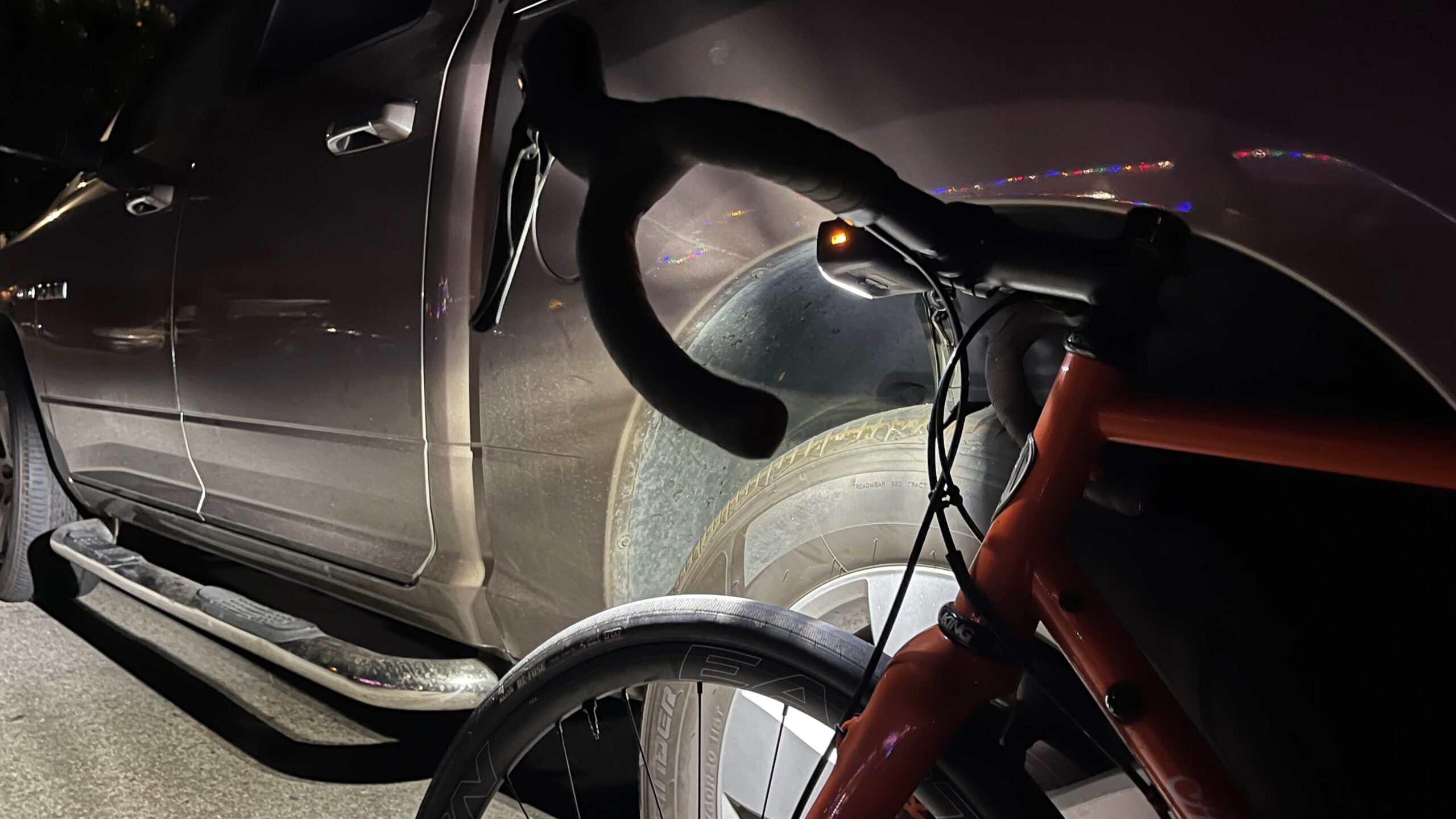
I commute a fair bit. Thousands of miles in the last 27 years. A lot of time has been, and continues to be, spent riding in the dark; before the sun comes up and after it goes down.
Lights matter and a lot goes in to choosing the right one. Beam spread, beam pattern, cutoff, throw, lumens, mounting options, heft, charge time, run time, safety features, form factor. All necessary considerations. Outbound Lighting’s Detour Bike Light is thoughtfully designed and balances each of these well. It is the best commuting light on the market. Also, it’s got some quirks.
There are many good reviews on the company and the light. Read them. This attempt is not to write a better one. Rather, it’s to provide some additional thoughts, observations, and less discussed details on the experience using the Detour.
So, in no particular order. . .
Form is a Factor.
A couple of things here.
First, long/skinny/tubular it is not. Short/wide/pudgy it is. Though, it is relatively light for a 1200 lumen self contained light. More on that below.
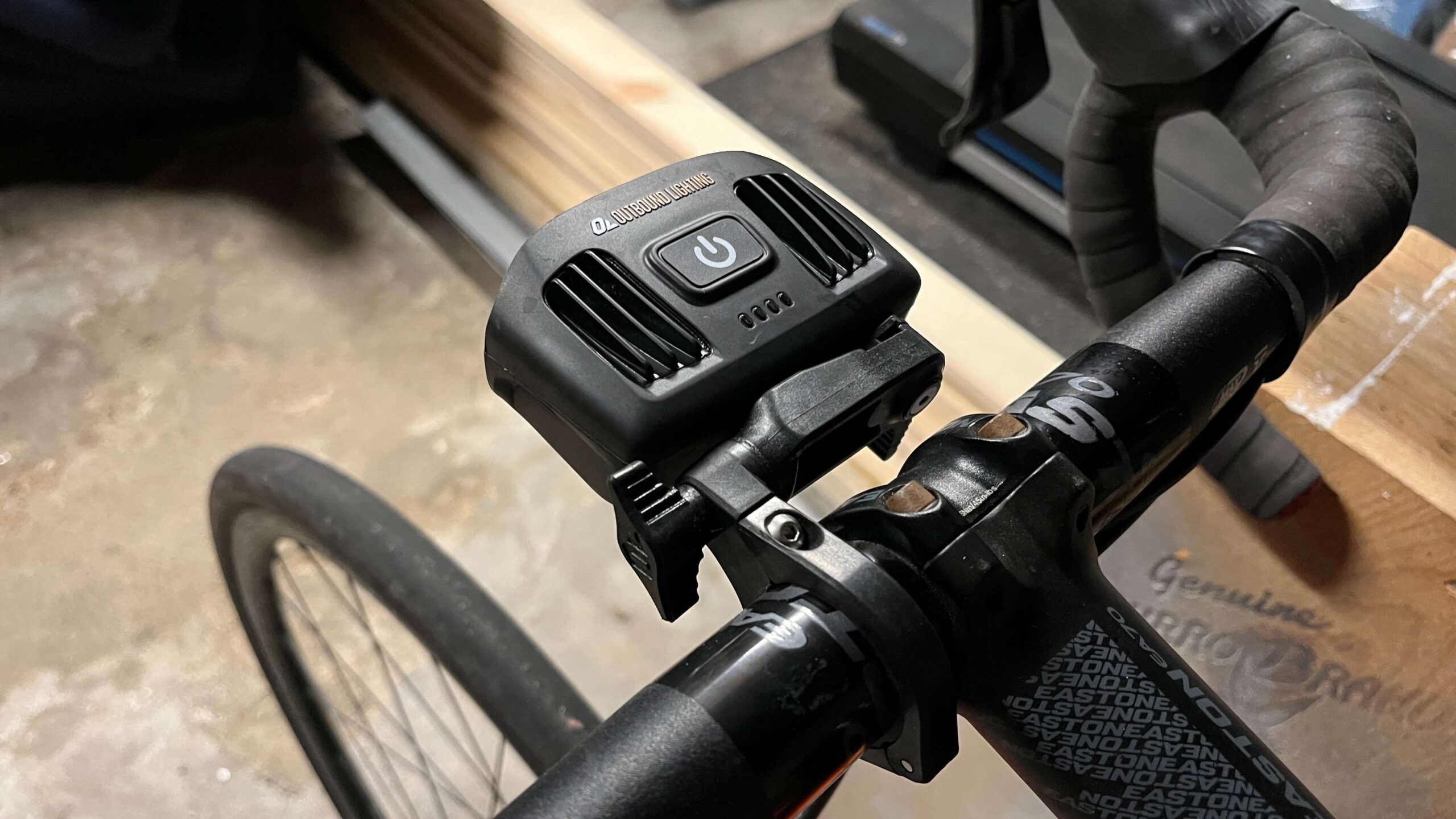
For years, my computer/navigation set-up has been a smart watch to track calories and GPS data while using Quad-Lock’s Out Front Mount PRO with underneath Go-Pro adapter for the iPhone and lighting combo. The cockpit is always tidy and centered. This set-up works because of the sturdy aluminum arm of the mount in addition to the placement AND low weights of long/skinny/tubular lights. . .with the exception of Bontrager’s ION Pro RT (now Trek ION Pro RT); that thing is portly relative to its size.
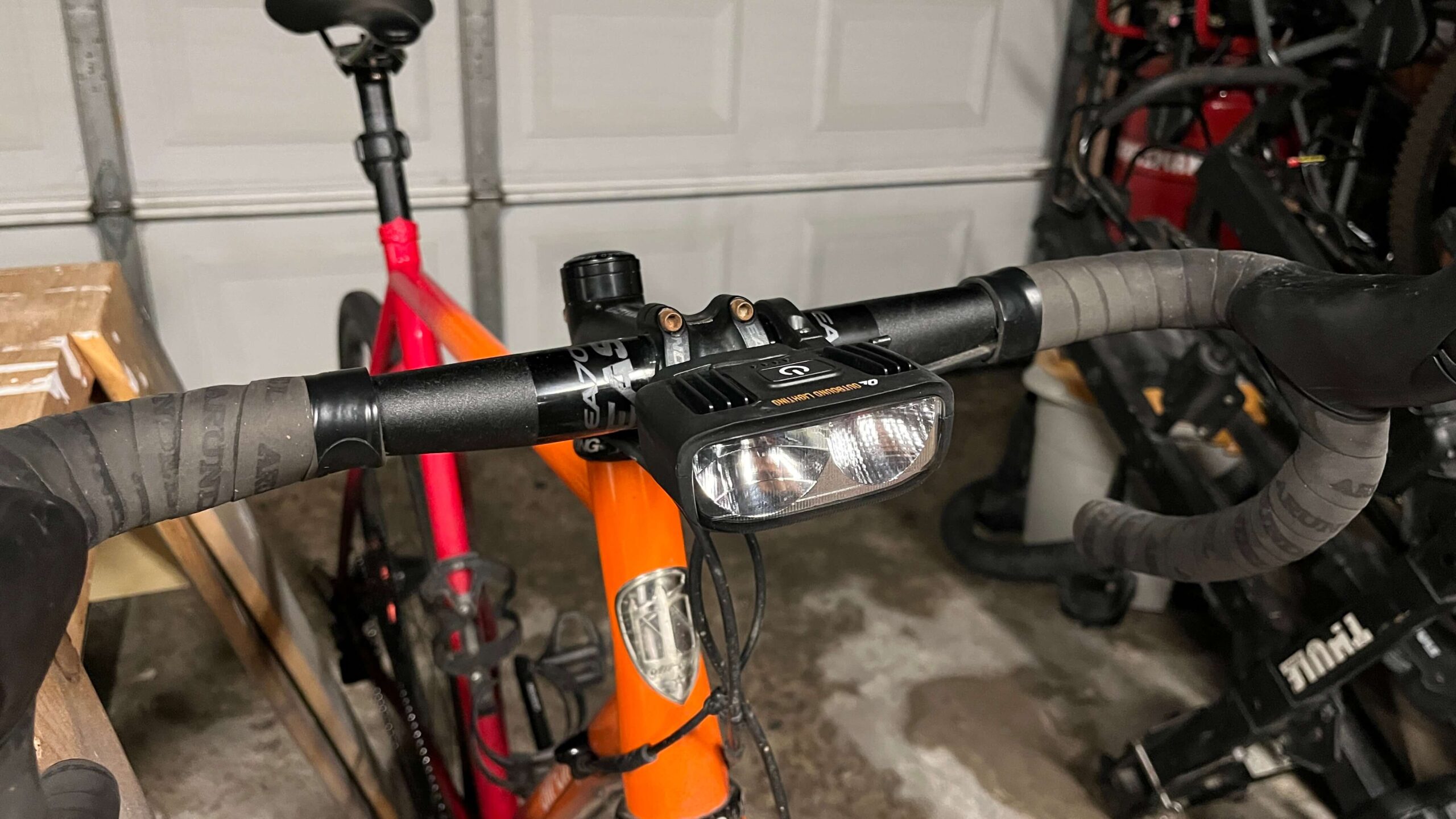
When used with my set-up, Outbound’s Go-Pro mount pushes the light forward of the phone. A lot. I mean, a lot. The cockpit is monstrous and looks terrible. And let’s be honest, looking good is the most important thing. This creates a long lever arm prone to rotation. The combo isn’t heavy, but it’s heavy enough that the weight of both overwhelm the mount. Bumps and high frequency road chatter create a distracting and unusable beam on its way to lighting up the front tire. Only the front tire. Bummer.
Second, most long/skinny/tubular lights mount upside down on the Go-Pro adapter. On/off and mode buttons are relatively easy to access, even while riding. Not so with the Detour. Like most lights, one button controls everything. The Detour’s right-side-up orientation sandwiches the power and function button between the light and phone making it inaccessible. As a result, the phone has been relegated to the backpack or jersey pocket. In fairness, the light COULD mount upside down. Caution is required here. If used like this, a lot of the engineering magic is lost. Outbound’s beam cut-off and spread technology are for not and built in safety features are compromised.
Quad-Lock and Outbound Lighting are not at fault, nor is it indicative of bad products. It is what it is. Frustrating though.
Handlebar Mount
Never have I ever used the default mount that ships with lights. They suck. Objectively so. Bulky, cumbersome, thoughtless things they are. Shit. They are shit. I don’t like them. The Detour’s handlebar mount, it turns out, is a brilliant piece of plastic in its simplicity and execution. It is not shit. It is the shit. Offset to ensure the light is centered, it tucks in closely to the stem faceplate.
Mode and Power Indicators
There are 6 modes. Most time is spent in the medium, ~800 lumen, setting. Not sunlight, but bright enough for dusk to dawn rides. In my very scientific testing, and only a very little power management, 5 1-hour rides can be squeezed out of a single charge. What other 1200 lumen, self-contained light does this? Perhaps there are some. I don’t know of any.
Every commuter has tempted fate with their light lasting one more ride and has dubiously ridden into that uncertainty. 100% of commuters’ lights entered “get me home” mode 10 minutes into a ride with 50 more to go. It’s the reality of riding in the dark, but it doesn’t need to be any longer.
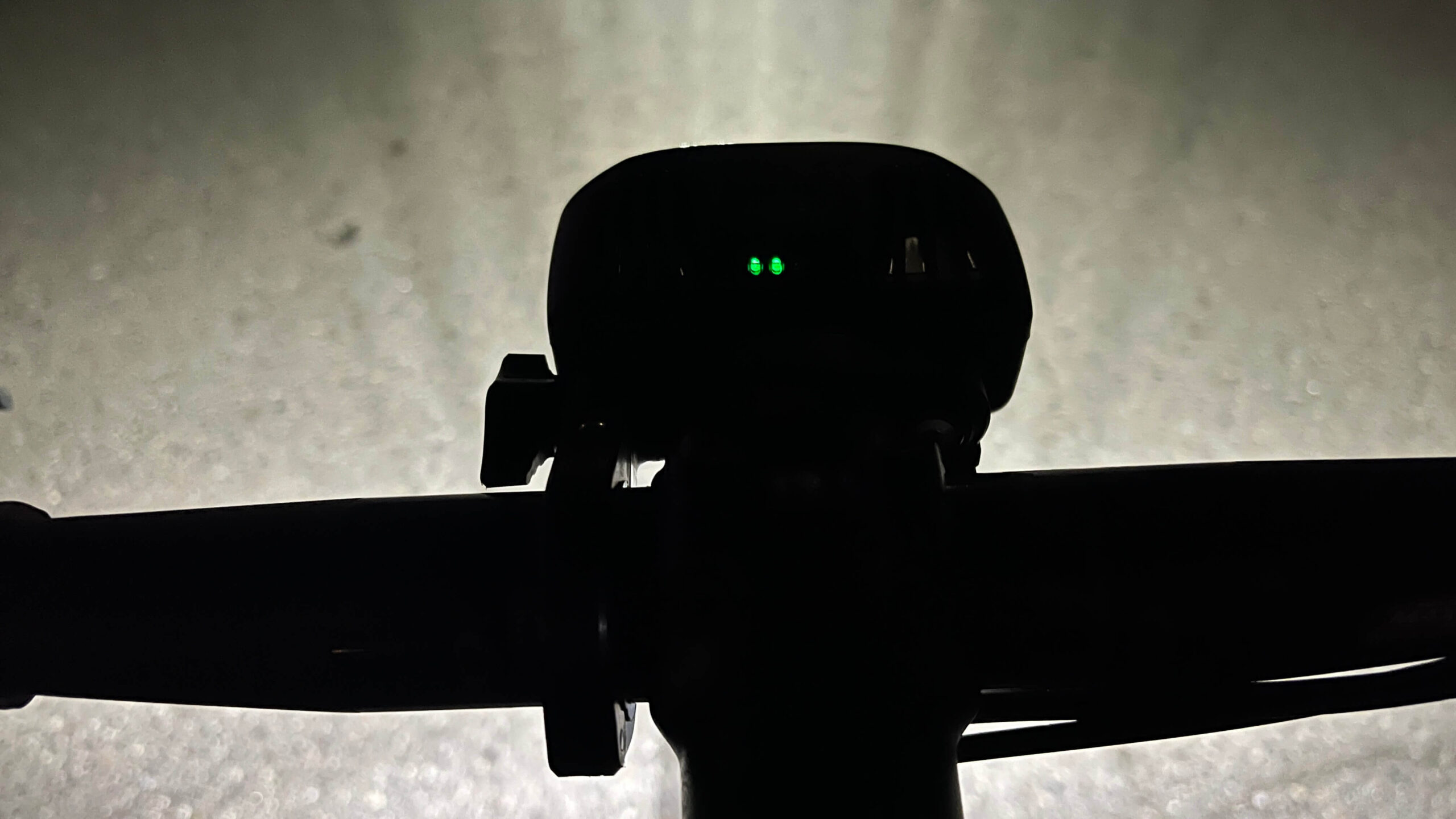
Power indicators include 4 green LEDs and they go dark from right to left as power is consumed. I appreciate the visual simplicity and practical application. Gone are the days of tempting fate on a ride with uncertain battery life. And losing.
These same 4 LEDs individually and momentarily shine brighter when cycling through modes, before toning down the green to serve their main purpose.
The Daytime Strobe setting is the most thoughtful in my view. Every light on the market has some type of flash or catchy blink patterns to attract driver attention. And they should. What sets the Detour apart is the execution of the flash. As far as I’m aware, daytime lights are off when not flashing in a patterns something like. . .off, flash flash. Off, flash flash. The Detour’s pattern is. . .on, flash flash. You can see it captured in the video below.
Positioning
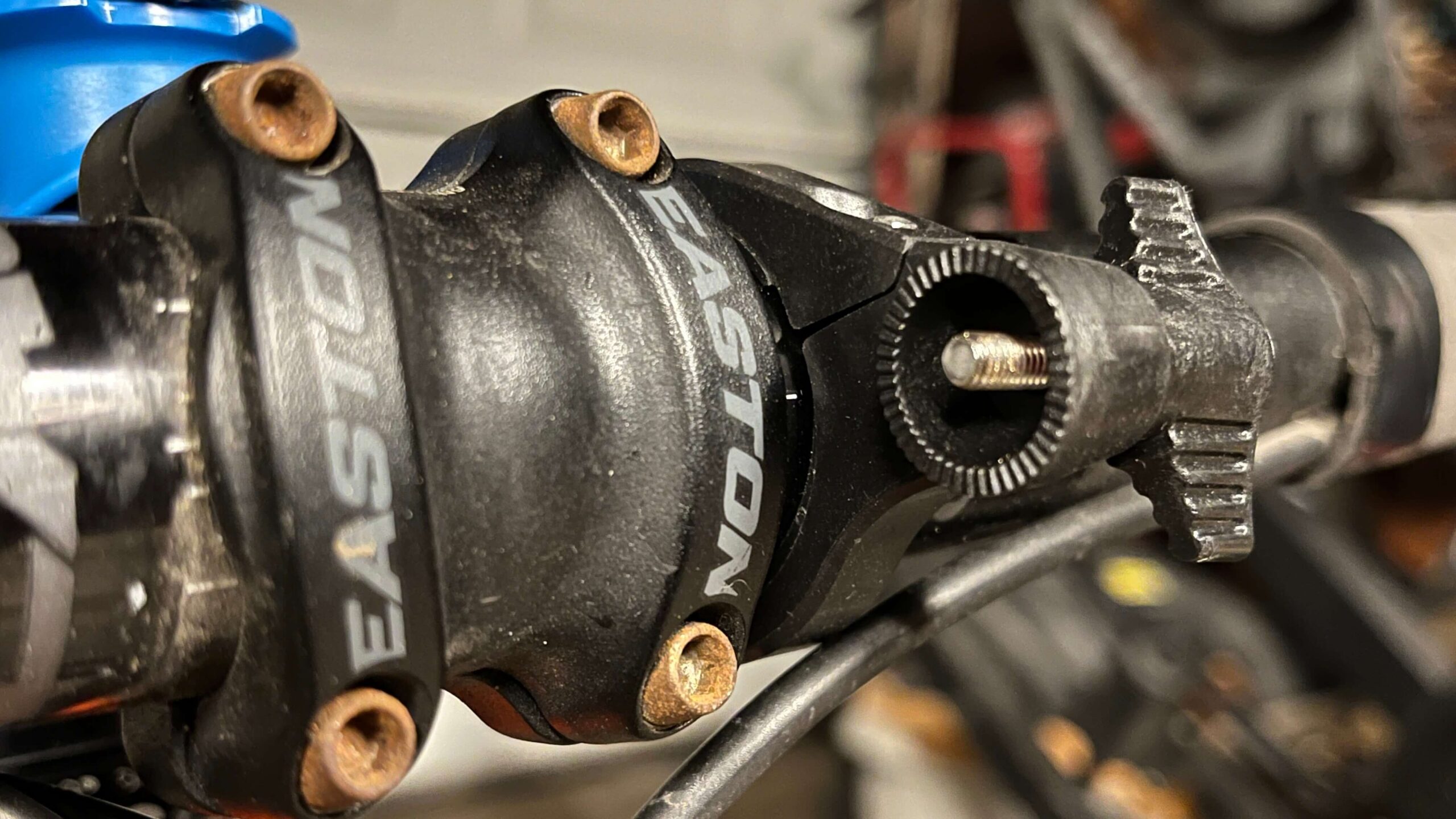
The light’s position wasn’t quite right on initial set-up. Outbound provides decent enough instructions, but the light’s beam was either too low and focused with short throw or too high and washed out. In the case of the latter, the beam’s cutoff technology that prevents blinding oncoming traffic, was useless. There are 45 notches in the mount that secure the light in position. Each notch offers 8° of adjustment. In my case, slightly rotating the handlebar mount up and the light one notch lower was the solution to getting all of the light’s benefits.
Parting thoughts
If for nothing else, the Detour should be a top 3 commuter contender for its brightness and run-time alone. The technology baked into the light creates an experience unique in the self-contained light game. Interestingly, I look forward to riding my bike so I can use the light. It’s that good.
I’m a previous user of NiteRider’s Lumina 900 for all commutes. It served dual duty as my mountain bike helmet light. It’s great; small, simple, light weight. Moving forward, it will only serve a single purpose. The Outbound Lighting Detour has supplanted it as the go-to for all dark commutes.